LevelOpt Topology Optimization
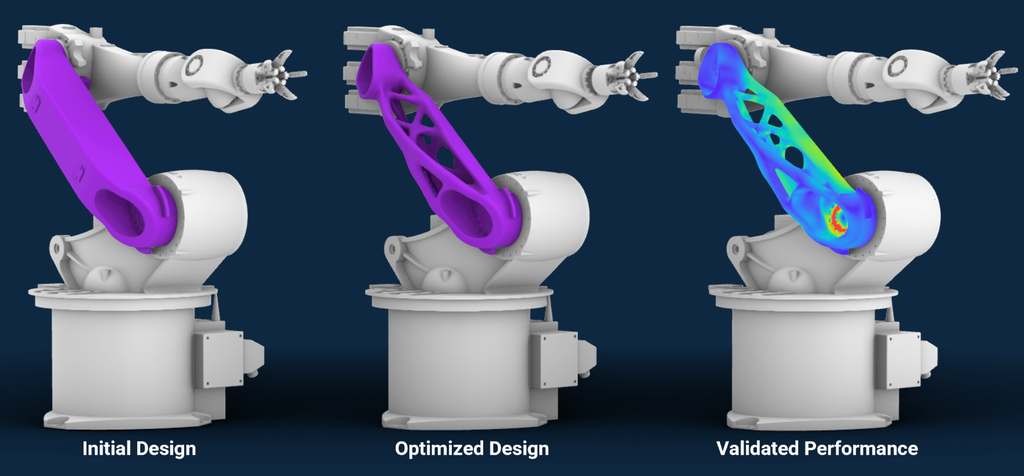
Why Topology Optimization Needs an Upgrade
Traditional density-based topology optimization (SIMP) offers the promise of lightweight, high-performance parts, but it falls short in real-world design workflows. Because SIMP tightly couples geometry with the finite element analysis (FEA) mesh, even small design tweaks require complete remeshing, slowing down iteration and making automation difficult. Its reliance on voxelized density fields leads to checkerboarding, jagged surfaces, and ambiguous boundaries that require significant post-processing—smoothing, reconstruction, and translation back into CAD.
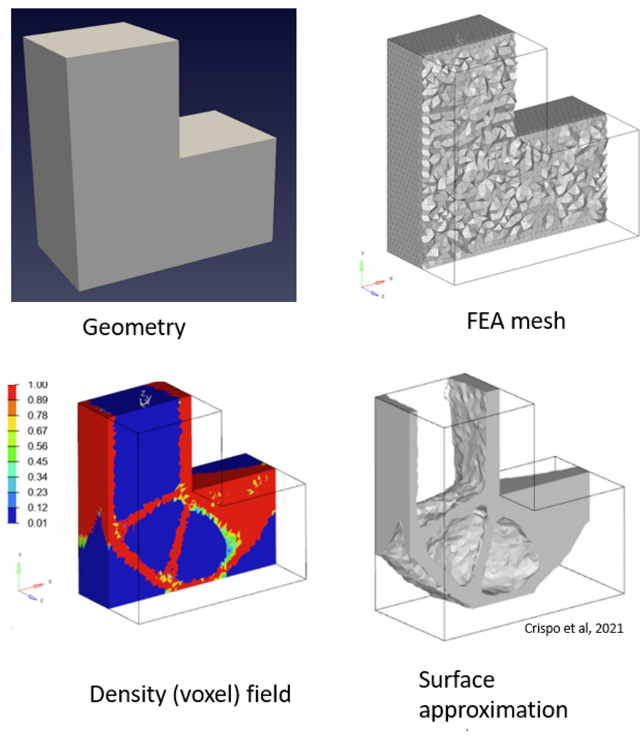
More fundamentally, SIMP behaves like a black box: engineers and design teams have little control over feature placement or shape and can’t directly manipulate boundaries. Any modification requires rerunning the entire optimization, making it impractical for workflows that demand design intent, fine-tuning, or manufacturability.
Unlocking Design Freedom with Level-Set
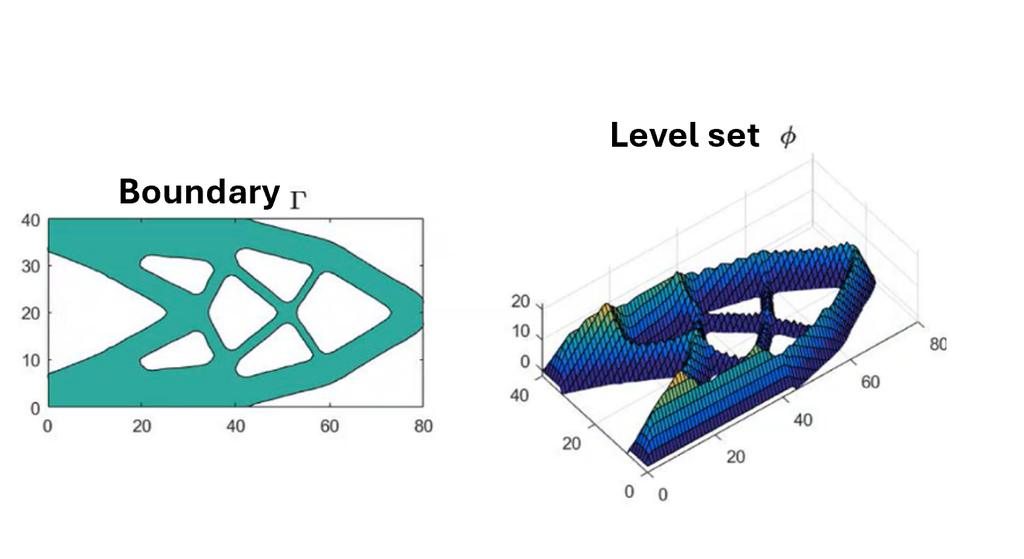
LevelOpt leverages the level-set method, explicitly representing geometry with smooth, clearly defined boundaries rather than implicit density fields. This boundary-based approach naturally produces smooth, CAD-friendly geometries without extensive post-processing, eliminating voxel artifacts and checkerboarding at the source. More importantly, it gives engineering teams direct influence over the shape, size, and location of structural features. For example, initial design guesses can be readily incorporated, preserving exact positions of mounting points, bolt holes, or mating surfaces, capabilities that are difficult or impractical for density methods, which lack explicit boundary control.
Level-Set Empowered with Intact IMM
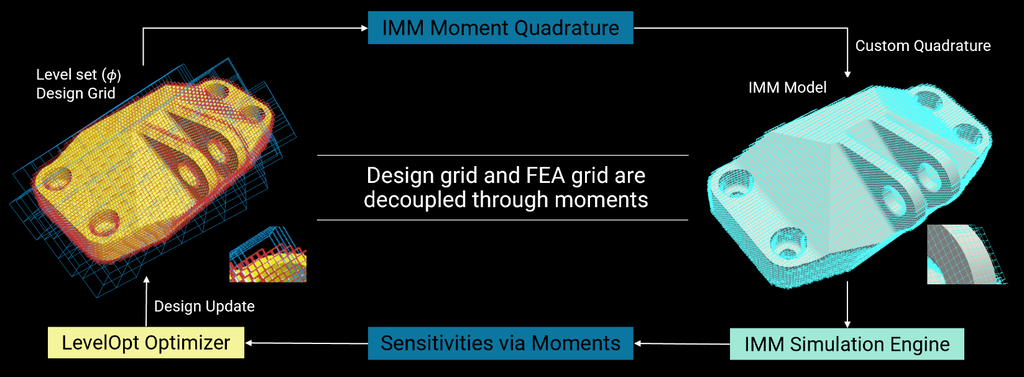
What makes LevelOpt powerful is pairing level-set optimization with Intact’s mesh-free Immersed Method of Moments (IMM). IMM fully decouples geometry representation from finite element analysis by utilizing two independent grids: a flexible, adaptive design grid that defines and evolves the level-set boundary, and a separate analysis grid specifically optimized for precise physics simulation. Engineering teams can accelerate design cycles by iterating quickly on coarse design grids and validating performance on refined analysis grids—no remeshing or translation needed. IMM’s precise, moment-based quadrature ensures accurate physics integration even when geometry intersects grid cells arbitrarily. With built-in validation that requires no additional geometry translation or cleanup, engineers achieve smooth, CAD-ready results directly within the same streamlined workflow.
LevelOpt Key Capabilities
Built-in FEA validation loop
Supports orthotropic material
Assembly-aware optimization
Preserve critical regions
User-guided Design Updates
Python API (PyIntact) for automation and batch processing
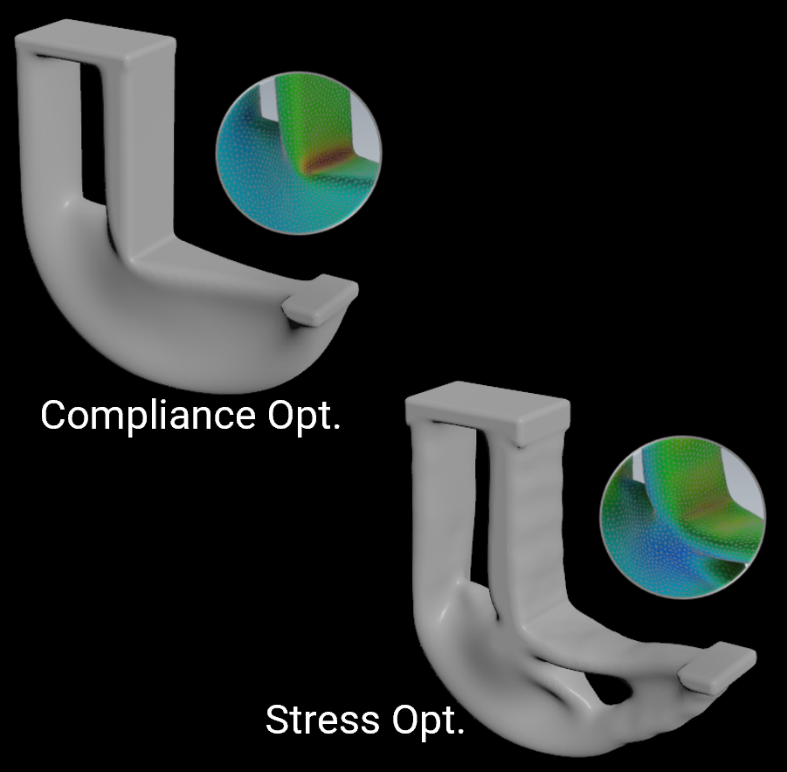
Stress, Modal, and other constraints coming soon
Manufacturable, CAD-Ready Designs
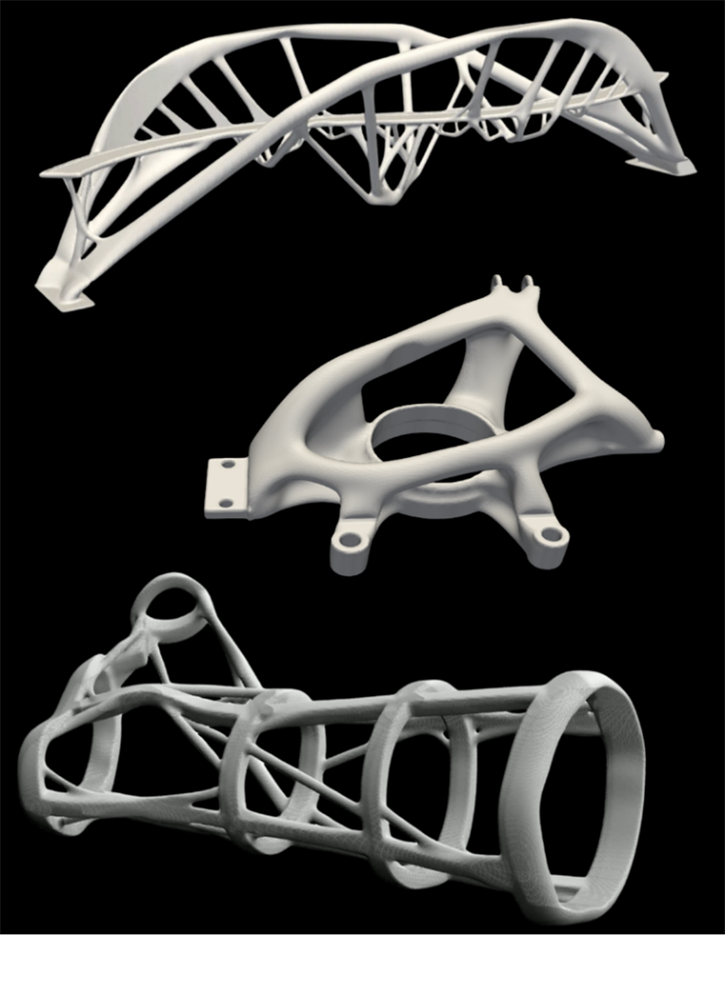
LevelOpt outputs smooth geometries directly from the optimization loop—no filtering, no mesh repair, and no conversion. Designs avoid voxel artifacts by construction and can be exported as B-reps or NURBS for direct use in CAD or manufacturing workflows. Most importantly, these designs are not just visually clean—they’re performance-verified.
Experience LevelOpt Today
Request a demo or trial and explore how LevelOpt transforms concept-to-production topology optimization into a seamless, intuitive, and powerful workflow.
Visit: www.intact-solutions.com